
I was going to ask for a phone recommendation because my latest phone (a Sony XPeria) doesn't do WiFi calling (thanks to Sony's reduced presence in North America). Then I read this article: https://www.aclu.org/news/free-speech/app-store-oligopoly I've been following Phosh since I applied for a job at Purism before covid. Debian and postmarketOS now seem mature enough to convince me to spring for the hardware and I was thinking of a PinePhone. It requires less of a financial commitment and runs less hot than a Librem 5, and my son has the watch (PineTime). Casual searching tells me the PinePhone's supported by Freedom and Telus. Does anyone have any experience? Mike

James Knott via Talk wrote on 2025-12-03 18:05:
I was going to ask for a phone recommendation because my latest phone (a Sony XPeria) doesn't do WiFi calling
Are you sure it's your phone? Your plan also has to support it. Cheaper plans tend not to. It's probably the phone, not the plan.
Once a device is approved by a carrier, it works regardless of cost of plan, in my experience. Source: I'm using Pixel on cheapest plan I could find at nee Wind Mobile and know of others doing same. It'd actually be tricky to block users based on their plan and managing blocking & unblocking as plans change.

In my case, it's carrier. I have Samsung Galaxy A16, and it supports "wifi calling". But, my carrier Freedom Mobile doesn't. I don't even see "wifi calling" entry in the Settings. On 2025-12-04 02:13, Ron via Talk wrote:
James Knott via Talk wrote on 2025-12-03 18:05:
I was going to ask for a phone recommendation because my latest phone (a Sony XPeria) doesn't do WiFi calling
Are you sure it's your phone? Your plan also has to support it. Cheaper plans tend not to. It's probably the phone, not the plan.
Once a device is approved by a carrier, it works regardless of cost of plan, in my experience.
Source: I'm using Pixel on cheapest plan I could find at nee Wind Mobile and know of others doing same.
It'd actually be tricky to block users based on their plan and managing blocking & unblocking as plans change.
------------------------------------ Description: GTALUG Talk Unsubscribe via Talk-unsubscribe@lists.gtalug.org Start a new thread: talk@lists.gtalug.org This message archived at https://lists.gtalug.org/archives/list/talk@lists.gtalug.org/message/VMXYADM...
William Park via Talk wrote on 2025-12-04 01:27:
In my case, it's carrier.
I guess it's: 1) device must support it 2) carrier must do ¿something? to enable it for a given device model
I have Samsung Galaxy A16, and it supports "wifi calling". But, my carrier Freedom Mobile doesn't.
I don't even see "wifi calling" entry in the Settings. I wonder if it's worth following the "Registration from a Computer"
Freedom Mobile does support WiFi calling - I use it, but I can't remember how I set it up. Seems they haven't bothered to support it for Samsung A16. Which is unfortunate. section here: https://www.freedommobile.ca/en-CA/support/about-wi-fi-calling Which links to https://myaccount.freedommobile.ca/dashboard/wifi-registration It'd be awesome if a work-around was found.

On Thu, Dec 4, 2025, 04:27 William Park via Talk <talk@lists.gtalug.org> wrote:
In my case, it's carrier. I have Samsung Galaxy A16, and it supports "wifi calling". But, my carrier Freedom Mobile doesn't. I don't even see "wifi calling" entry in the Settings.
Sample size of one. I have a Pixel 9 and freedom is my provider. I do have a setting for Wi-Fi calling though I haven't enabled it. I'll give it a try tomorrow in a location that I know has Wi-Fi but not good cell coverage by Freedom If your phone doesn't even have a switch in the settings, then how can you be sure that Wi-Fi calling is supported on that particular model (and national variant)? I'd suggest both phone and carrier need to enable it. - Evan
On Thu, Dec 4, 2025 at 2:14 AM Ron via Talk <talk@lists.gtalug.org> wrote:
It'd actually be tricky to block users based on their plan and managing blocking & unblocking as plans change.
My wife has an old iPhone she uses with Freedom, with wifi calling. When she tried enabling it on her newer iPhone which is with Telus, a message pops up saying contact Telus. Telus told her that feature was for their premium (contract) users, while she switched to prepaid a year or two ago because of extortionate pricing. Mike

I owned both the pinephone (original model, first wave of production) and the librem 5. Both of their specs match bottom tier cheap Android devices nowadays, and both cameras were very much behind the times. As far as phone functionality is concerned, they could both make calls on Rogers network. SMS was hit or miss with them, and battery life was around 5 hours of total charge, even when idle. For my purposes, neither were consistent enough to be daily drivers and neither had an app for Signal, my preferred messaging tool, so I had to let them both go. I've long been a follower and supporter of foss phones, having had an OpenMoko Freerunner that I actually used as my main phone, a Nokia n9 (best phone of all time, despite not being totally open), various iterations of SailfishOS on supported devices, and even a Firefox phone (it was terrible). Throughout all of that, I've grown a deep appreciation for kernel level developers and just how much software can influence performance of a device. When both of the devices you mentioned were first in development their specs were on par with mid tier Android devices, and on release they felt sluggish. Over the years all aspects improved, but the hw feels like the limiting factor now. I'm not saying that you shouldn't get one, but would like your expectations to be properly set. They are very capable little portable Linux devices and I'm sure have uses outside of just phones. -jason On Thu, Dec 4, 2025, 07:04 Michael Hill via Talk <talk@lists.gtalug.org> wrote:
On Thu, Dec 4, 2025 at 2:14 AM Ron via Talk <talk@lists.gtalug.org> wrote:
It'd actually be tricky to block users based on their plan and managing blocking & unblocking as plans change.
My wife has an old iPhone she uses with Freedom, with wifi calling. When she tried enabling it on her newer iPhone which is with Telus, a message pops up saying contact Telus. Telus told her that feature was for their premium (contract) users, while she switched to prepaid a year or two ago because of extortionate pricing.
Mike
------------------------------------ Description: GTALUG Talk Unsubscribe via Talk-unsubscribe@lists.gtalug.org Start a new thread: talk@lists.gtalug.org This message archived at https://lists.gtalug.org/archives/list/talk@lists.gtalug.org/message/TNLOVKH...
On Thu, Dec 4, 2025 at 7:47 AM Jason Shaw <grazer@gmail.com> wrote: As far as phone functionality is concerned, they could both make calls on
Rogers network. SMS was hit or miss with them, and battery life was around 5 hours of total charge, even when idle.
Thank you, Jason. This is exactly the kind of information I wanted.
I've long been a follower and supporter of foss phones, having had an OpenMoko Freerunner that I actually used as my main phone, a Nokia n9 (best phone of all time, despite not being totally open), various iterations of SailfishOS on supported devices, and even a Firefox phone (it was terrible).
I have an N9 and it's excellent. It's been awaiting assembly since my replacement screen arrived. It was while I was waiting that I went to the Freedom store and got my first Sony. It's been far too long (ten years?) since I was able to install my own OS.
I'm not saying that you shouldn't get one, but would like your expectations to be properly set. They are very capable little portable Linux devices and I'm sure have uses outside of just phones.
Thanks again. I'll keep you posted. Mike

On Thu, Dec 04, 2025 at 07:47:40AM -0500, Jason Shaw via Talk wrote:
I owned both the pinephone (original model, first wave of production) and the librem 5. Both of their specs match bottom tier cheap Android devices nowadays, and both cameras were very much behind the times.
The performance of the Pine Phone leaves *a lot* to be desired. I set mine up on wifi to experiment with before moving my SIM over, and had such a poor user experience that I never bothered. That's purely a poor *user* experience. From a tinkering point of view, I enjoyed it. So I guess figure out what your desire is before buying the phone. It might be more worthwhile to get a mainstream phone that still has decent postmarketos support (Pixel 6a from memory, but don't quote me on that).
I've long been a follower and supporter of foss phones, having had an OpenMoko Freerunner that I actually used as my main phone, a Nokia n9 (best phone of all time, despite not being totally open), various iterations of SailfishOS on supported devices, and even a Firefox phone (it was terrible).
Despite not being truely FOSS, I really liked Palm's WebOS phones. Linux under the hood, running pulseaudio for sound routing. Basically user accessible out of the box. -- Chris Irwin email: chris@chrisirwin.ca xmpp: chris@chrisirwin.ca web: https://chrisirwin.ca
On Tue, Dec 9, 2025, 11:31 Chris Irwin via Talk <talk@lists.gtalug.org> wrote:
The performance of the Pine Phone leaves *a lot* to be desired. I set mine up on wifi to experiment with before moving my SIM over, and had such a poor user experience that I never bothered.
That's purely a poor *user* experience. From a tinkering point of view, I enjoyed it. So I guess figure out what your desire is before buying the phone.
It might be more worthwhile to get a mainstream phone that still has decent postmarketos support (Pixel 6a from memory, but don't quote me on that).
Yeah. I had to install a different modem firmware in order to get a somewhat reliable connection, but even then it ran hot and drained battery very fast. I agree that they are cool tinkering devices and I want the Linux on phones/tablets experience to continue improving.
Despite not being truely FOSS, I really liked Palm's WebOS phones. Linux under the hood, running pulseaudio for sound routing. Basically user accessible out of the box.
The n9 was similar. Debian under the hood with sudo access. And an amazing camera! When Apple unveiled gesture based navigation on iOS I was so angry cause maemo and meego both had that years before Apple. But that's true of the open source world quite often.
On Tue, Dec 9, 2025, 11:42 James Knott via Talk <talk@lists.gtalug.org> wrote:
.
Android is "Linux under the hood". ------------------------------------
Yes but it hides Linux nearly entirely from the user. I know graphene and other de-googled Android variants exist and are pretty cool, so I guess what I meant was that I want a Linux phone with access to more of the standard Linux/FOSS tools and experiences that I'm used to.

I agree. Google would want to hide any Linux touches entirely. Actually, given that Apple systems are UNIX based too, how close was early IOS to Linux? Kare On Tue, 9 Dec 2025, Jason Shaw via Talk wrote:
On Tue, Dec 9, 2025, 11:42 James Knott via Talk <talk@lists.gtalug.org> wrote:
.
Android is "Linux under the hood". ------------------------------------
Yes but it hides Linux nearly entirely from the user. I know graphene and other de-googled Android variants exist and are pretty cool, so I guess what I meant was that I want a Linux phone with access to more of the standard Linux/FOSS tools and experiences that I'm used to.

On 12/9/25 14:58, Karen Lewellen via Talk wrote:
how close was early IOS to Linux?
The tech is similar underneath. It's the "desktop" where the main difference is. I really don't care for iPhones. I have used Android, iPhone and even one Blackberry in my work. I only buy Android for myself, most recently a Google Pixel 10 Pro. BTW, I'm currently reading a book "Chasing Shadows" by Ronald Deibert, of Citizen Lab <https://en.wikipedia.org/wiki/Citizen_Lab>. They deal with cell phone security issues. According to him, the supposedly secure Blackberry isn't. The company was actually helping foreign governments spy on users, despite claiming it couldn't be done!

On Tue, Dec 09, 2025 at 02:58:57PM -0500, Karen Lewellen via Talk wrote:
I agree. Google would want to hide any Linux touches entirely. Actually, given that Apple systems are UNIX based too, how close was early IOS to Linux?
Well Apple has been using FreeBSD for some of the unix parts and the Mach kernel underneath for many years. They seem to be very alergic to GPL so linux is not something they want to go near at all. They really like the Mach kernel though. There was even MkLinux which was linux running on top of the Mach kernel which was how some Macs used to be able to run Linux. -- Len Sorensen
Hi Len, I am on a few lists with people who, as they state, run Linux in a virtual environment on their mac. And, apparently run some Linux items on their mac terminals on their mac as well. That there is freedsb under the mac somewhere gave me a smile, my first Linux shell service exposure was actually a freedsb focus. Kare On Tue, 9 Dec 2025, Lennart Sorensen wrote:
On Tue, Dec 09, 2025 at 02:58:57PM -0500, Karen Lewellen via Talk wrote:
I agree. Google would want to hide any Linux touches entirely. Actually, given that Apple systems are UNIX based too, how close was early IOS to Linux?
Well Apple has been using FreeBSD for some of the unix parts and the Mach kernel underneath for many years. They seem to be very alergic to GPL so linux is not something they want to go near at all. They really like the Mach kernel though. There was even MkLinux which was linux running on top of the Mach kernel which was how some Macs used to be able to run Linux.
-- Len Sorensen
On Tue, Dec 09, 2025 at 11:42:05AM -0500, James Knott via Talk wrote:
On 12/9/25 11:25, Chris Irwin via Talk wrote:
Despite not being truely FOSS, I really liked Palm's WebOS phones. Linux under the hood, running pulseaudio for sound routing. Basically user accessible out of the box.
Android is "Linux under the hood".
Sure, but the hood is bolted down. You could get shell access on WebOS. The primary app platform was HTML + Javascript, which was very accessible for modifications. You could write shell scripts to do things. -- Chris Irwin email: chris@chrisirwin.ca xmpp: chris@chrisirwin.ca web: https://chrisirwin.ca
speaking personally, its rather a shame no project actually took creating a Linux phone seriously enough to be a solid player. Might have been a terrific way to expand Linux to end users who wanted more choices, but who would not know about Linux otherwise. Kare On Tue, 9 Dec 2025, Chris Irwin via Talk wrote:
On Thu, Dec 04, 2025 at 07:47:40AM -0500, Jason Shaw via Talk wrote:
I owned both the pinephone (original model, first wave of production) and the librem 5. Both of their specs match bottom tier cheap Android devices nowadays, and both cameras were very much behind the times.
The performance of the Pine Phone leaves *a lot* to be desired. I set mine up on wifi to experiment with before moving my SIM over, and had such a poor user experience that I never bothered.
That's purely a poor *user* experience. From a tinkering point of view, I enjoyed it. So I guess figure out what your desire is before buying the phone.
It might be more worthwhile to get a mainstream phone that still has decent postmarketos support (Pixel 6a from memory, but don't quote me on that).
I've long been a follower and supporter of foss phones, having had an OpenMoko Freerunner that I actually used as my main phone, a Nokia n9 (best phone of all time, despite not being totally open), various iterations of SailfishOS on supported devices, and even a Firefox phone (it was terrible).
Despite not being truely FOSS, I really liked Palm's WebOS phones. Linux under the hood, running pulseaudio for sound routing. Basically user accessible out of the box.
-- Chris Irwin
email: chris@chrisirwin.ca xmpp: chris@chrisirwin.ca web: https://chrisirwin.ca ------------------------------------ Description: GTALUG Talk Unsubscribe via Talk-unsubscribe@lists.gtalug.org Start a new thread: talk@lists.gtalug.org This message archived at https://lists.gtalug.org/archives/list/talk@lists.gtalug.org/message/CDC4MKO...
On 12/9/25 14:53, Karen Lewellen via Talk wrote:
speaking personally, its rather a shame no project actually took creating a Linux phone seriously enough to be a solid player. Might have been a terrific way to expand Linux to end users who wanted more choices, but who would not know about Linux otherwise. Kare
But then you'd also have to create the supporting ecosystem, such as an app store. A smart phone without apps isn't much of a smart phone.

I have several 3G phones I bought for $3 each, just to use as an expendable camera. That is, to carry while working in the garden, canoeing, etc when I might lose or dump them in water or drop them on something hard and break them. Is hardware that universal that linux will always be able to use the camera on a former phone? I'm guessing not. I have 3 phones (were 3G phones, sold for $3 each) I am currently using (the battery lasts only 24-36 hours so I have to rotate them, especially if I forget to put back on charger immediately after use. One I cracked the screen dropping it on a patio stone in my garden, but, it still works. a 4th phone is now asking for a password after I let the battery run downcompletely, and I have no idea how to recover (but have not looked yet). can I install linux on it somehow? the 5th phone actually cost a bit more, but has a better camera system, including panorama mode. but when I unlock it and connect to my computer, it does NOT connect and allow downloading pictures to my computer. If I install linux, will it recognize panorama mode? or is that all software, and ALL the phones will gain panorama mode if I install linux? in the future, if I could connect them to wifi and use as a local phone that might be good, but I am not ready for that yet. Carey
CAREY SCHUG via Talk wrote on 2025-12-09 12:21:
the 5th phone actually cost a bit more, but has a better camera system, including panorama mode. but when I unlock it and connect to my computer, it does NOT connect and allow downloading pictures to my computer.
Might have to check the USB settings on the phone and select PTP or, better, MTP. Other choices are "Charge only" and "tethering". If you can install KDEconnect on your desktop and phone, you can access anything on the phone from the computer over WiFi.
If I install linux, will it recognize panorama mode? or is that all software, and ALL the phones will gain panorama mode if I install linux?
Unlikely - the camera app is responsible for a *lot* of features and the Google camera app is probably the best of the lot.
On Tue, Dec 9, 2025, 14:54 Karen Lewellen via Talk <talk@lists.gtalug.org> wrote:
speaking personally, its rather a shame no project actually took creating a Linux phone seriously enough to be a solid player. Might have been a terrific way to expand Linux to end users who wanted more choices, but who would not know about Linux otherwise. Kare
One the main issues with Linux on phones is that of hardware. It changes often because users want the latest and greatest, lots of the hw users proprietary drivers and/or binary blobs that are basically black boxes. There have been efforts to take the kernels from Android devices and use them to boot into a more traditional UI like KDE plasma, but what trends to happen is that the devs learn just how optimized the various drivers are and how difficult to access them with standard non Android Linux apps and tools. I followed the pinephone and librem 5 camera work closely for around 18 months and it was astounding how good the camera is on paper (specs) vs how badly it performs with an open source driver. And that's just one piece of the ecosystem. As pointed out, apps and easy access to them are what make or break a device, and currently most apps are fairly iOS/Android specific, so porting them is difficult and companies just don't see the value in offering them for a 3rd platform. The OpenMoko FreeRunner beat the iPhone to market, iirc, or was at least contemporary, but iOS got their app store up and were able to capitalize on their name and brand reputation, whereas the FR was basically an enthusiast phone.
That just seasons what I mean by missed opportunity. I suspect the end user wanting the latest / greatest is more marketing telling the end user they cannot survive without it..that so many cheep less bells and jingles editions of android phones exists sort of supports that perspective. Still, much of what you write, speaking personally, screams out for innovation at the computer lab level university wise. Hardware ideas and expansive software creation. One cannot have a market, if the product does not exist to show the audience. Its really sad, speaking personally, that all the paths are in the hands of so very very few. Kare On Tue, 9 Dec 2025, Jason Shaw via Talk wrote:
On Tue, Dec 9, 2025, 14:54 Karen Lewellen via Talk <talk@lists.gtalug.org> wrote:
speaking personally, its rather a shame no project actually took creating a Linux phone seriously enough to be a solid player. Might have been a terrific way to expand Linux to end users who wanted more choices, but who would not know about Linux otherwise. Kare
One the main issues with Linux on phones is that of hardware. It changes often because users want the latest and greatest, lots of the hw users proprietary drivers and/or binary blobs that are basically black boxes. There have been efforts to take the kernels from Android devices and use them to boot into a more traditional UI like KDE plasma, but what trends to happen is that the devs learn just how optimized the various drivers are and how difficult to access them with standard non Android Linux apps and tools.
I followed the pinephone and librem 5 camera work closely for around 18 months and it was astounding how good the camera is on paper (specs) vs how badly it performs with an open source driver. And that's just one piece of the ecosystem.
As pointed out, apps and easy access to them are what make or break a device, and currently most apps are fairly iOS/Android specific, so porting them is difficult and companies just don't see the value in offering them for a 3rd platform.
The OpenMoko FreeRunner beat the iPhone to market, iirc, or was at least contemporary, but iOS got their app store up and were able to capitalize on their name and brand reputation, whereas the FR was basically an enthusiast phone.
On Tue, Dec 09, 2025 at 03:37:57PM -0500, Karen Lewellen via Talk wrote:
That just seasons what I mean by missed opportunity. I suspect the end user wanting the latest / greatest is more marketing telling the end user they cannot survive without it..that so many cheep less bells and jingles editions of android phones exists sort of supports that perspective.
Latest and greatest really isn't a big deal. You can get the latest and greatest on an x86 PC without too much fuss, because there's an established standard of interoperability. A new x86 motherboard will support UEFI, your OS boots via UEFI, therefore your OS will boot on the new motherboard. You don't need to wait for some anonymous smart person to buy the same motherboard you have and port Linux to it. You don't need to hound your motherboard manufacturer to release Linux modifications under the GPL. Note: I'm not talking about specific hardware drivers (ex: GPU, fingerprint reader, etc). Merely the ability to boot an OS itself. That's not the case with most ARM platforms, especially in phones. The on-device firmware is extremely minimal, and the OS itself is expected to know the inner workings and intricate details of the hardware. That's why you have "Raspberry Pi OS" instead of just shipping plain-old Debian. That's why the Pixel 3a has support in Postmarket OS, but other devices with similar hardware don't. This could be solved. Requiring UEFI on ARM, for example. Microsoft required it for Windows on ARM devices, as they don't want to support device-specific editions of Windows (now, those were locked down via restricted secure boot, but that's *yet another* topic). Instead of a manufacturer modifying Linux with hardware details, they'd instead do those modifications in UEFI. Yes, we'd still need device-specific drivers (for ex: GPU, etc), but lets just deal with the ability to *boot* an OS first. The UEFI implementation doesn't even need to be burned into the firmware. PFTF [1] built UEFI for the Pi3 and Pi4. It works very well abstracting the Pi-specific details, allowing *Generic* ARM Linux to boot (no need for a Pi-specific build). 1. https://github.com/pftf I doubt this will ever happen in phones, though. There's no incentive for them to do this, and nobody with a big stick requiring it. -- Chris Irwin email: chris@chrisirwin.ca xmpp: chris@chrisirwin.ca web: https://chrisirwin.ca

From: Chris Irwin via Talk <talk@lists.gtalug.org>
Latest and greatest really isn't a big deal. You can get the latest and greatest on an x86 PC without too much fuss, because there's an established standard of interoperability.
A new x86 motherboard will support UEFI, your OS boots via UEFI, therefore your OS will boot on the new motherboard. You don't need to wait for some anonymous smart person to buy the same motherboard you have and port Linux to it. You don't need to hound your motherboard manufacturer to release Linux modifications under the GPL.
Note: I'm not talking about specific hardware drivers (ex: GPU, fingerprint reader, etc). Merely the ability to boot an OS itself.
That's not the case with most ARM platforms, especially in phones. The on-device firmware is extremely minimal, and the OS itself is expected to know the inner workings and intricate details of the hardware.
That's why you have "Raspberry Pi OS" instead of just shipping plain-old Debian. That's why the Pixel 3a has support in Postmarket OS, but other devices with similar hardware don't.
This could be solved. Requiring UEFI on ARM, for example. Microsoft required it for Windows on ARM devices, as they don't want to support device-specific editions of Windows (now, those were locked down via restricted secure boot, but that's *yet another* topic).
Instead of a manufacturer modifying Linux with hardware details, they'd instead do those modifications in UEFI. Yes, we'd still need device-specific drivers (for ex: GPU, etc), but lets just deal with the ability to *boot* an OS first.
The UEFI implementation doesn't even need to be burned into the firmware. PFTF [1] built UEFI for the Pi3 and Pi4. It works very well abstracting the Pi-specific details, allowing *Generic* ARM Linux to boot (no need for a Pi-specific build).
The Snapdragon X notebooks are ARM, UEFI, and are supported poorly by Linux. Too many features are undocumented. Interestingly, different brands are supported differently. There was a claim that Linux support would be forthcoming, but it looks like the notebooks will be obsolete before there is good support. <https://discourse.ubuntu.com/t/ubuntu-concept-snapdragon-x-elite/48800> These computers have seen recent large discounts. I take that as some kind of indicator of failure. But it just might be because the new line has been revealed. (When I saw these deals I got interested but then discovered how poor Linux support was.)
Chris Irwin via Talk wrote on 2025-12-09 14:03:
That's not the case with most ARM platforms, especially in phones. The on-device firmware is extremely minimal, and the OS itself is expected to know the inner workings and intricate details of the hardware.
I think kinda disagree here. My understanding is that the modem firmware - and everything controlling the SoC - are essential to the device. Also quite difficult to replace because they're unreachable at layers below Android, and also because they're quite complex. Perhaps my understanding is incorrect?
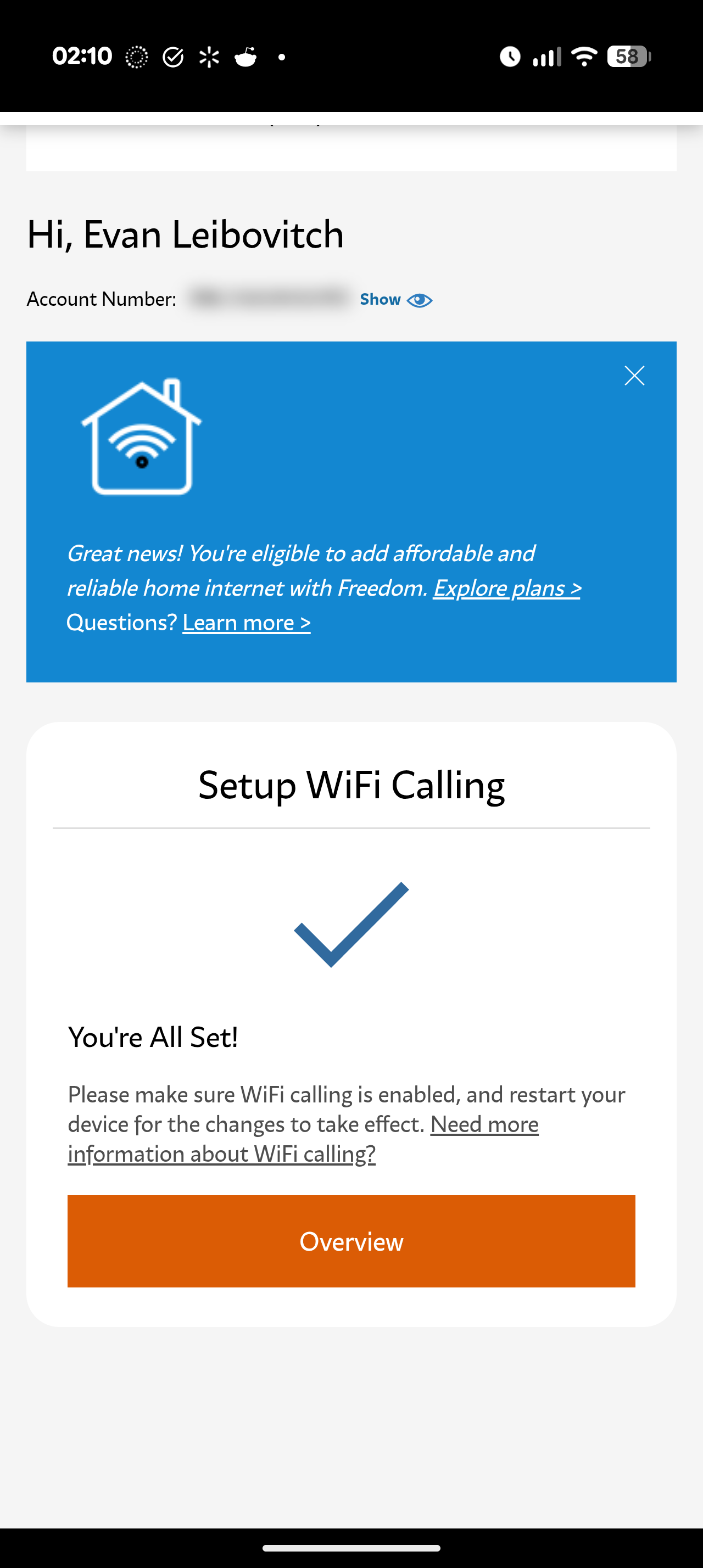
Update: I just enabled WiFi calling on Freedom using my Pixel 9. If you're using this carrier the issue is with your phone. Evan Leibovitch, Toronto Canada @evanleibovitch / @el56 On Wed, Dec 10, 2025, 02:15 Ron via Talk <talk@lists.gtalug.org> wrote:
Chris Irwin via Talk wrote on 2025-12-09 14:03:
That's not the case with most ARM platforms, especially in phones. The on-device firmware is extremely minimal, and the OS itself is expected to know the inner workings and intricate details of the hardware.
I think kinda disagree here.
My understanding is that the modem firmware - and everything controlling the SoC - are essential to the device.
Also quite difficult to replace because they're unreachable at layers below Android, and also because they're quite complex.
Perhaps my understanding is incorrect?
------------------------------------ Description: GTALUG Talk Unsubscribe via Talk-unsubscribe@lists.gtalug.org Start a new thread: talk@lists.gtalug.org This message archived at https://lists.gtalug.org/archives/list/talk@lists.gtalug.org/message/FTYDB5O...
From: Evan Leibovitch via Talk <talk@lists.gtalug.org>
Update:
I just enabled WiFi calling on Freedom using my Pixel 9. If you're using this carrier the issue is with your phone.
As I understand it, Freedom has a list of phone models that it will support with WiFi calling. I have heard that they will not allow Chinese brands like Ulephone but will allow Chinses brand Lenovo. We have one of the earliest Pixels to support WiFi calling, a Pixel with Google Fi firmware. It isn't supported. So there are odd edge cases. If you cannot get it working, try Freedom Support. They may or may not be helpful. (I depend on Freedom's WiFi calling because my basement (where my office is) doesn't have good/reliable cellular coverage.)
On Wed, Dec 10, 2025, 09:30 D. Hugh Redelmeier via Talk < talk@lists.gtalug.org> wrote: As I understand it, Freedom has a list of phone models that it will support
with WiFi calling. I have heard that they will not allow Chinese brands like Ulephone but will allow Chinses brand Lenovo.
This struck me as an RTFM moment so I went to the source and found this: https://www.freedommobile.ca/en-CA/byop_compatibility_check - Evan

Here is my stupid question for the day. Wifi calling. Is this just VOIP with some wired in setup to the carrier? Or is it a fully integrated service that allows active call transfer from a local cell tower to your wifi setup? Once upon a time there was the concept of using femtocells to extend carrier services into peoples homes. -- Alvin Starr || land: (647)478-6285 Netvel Inc. || home: (905)513-7688 alvin@netvel.net ||
On 12/10/25 16:48, Alvin Starr via Talk wrote:
Is this just VOIP with some wired in setup to the carrier? Or is it a fully integrated service that allows active call transfer from a local cell tower to your wifi setup?
It uses WiFi to connect the phone to the cell network, instead of going through a cell site. This is useful for those who have poor service around there home and it also helps the cell company by off loading some traffic from the cell sites. Beyond that the calls are pretty much identical. That is VoIP in IPSec and UDP added for WiFi calling to get through NAT etc..
Alvin Starr via Talk wrote on 2025-12-10 13:48:
Here is my stupid question for the day.
Wifi calling.
Is this just VOIP with some wired in setup to the carrier?
James covered it well. It's VoLTE but with WiFi instead of LTE. Valid SIM card required for authentication by the phone to the network. Hand-off between home WiFi and carrier's towers when in motion is seamless. An excellent choice for travelling, as long as one has WiFi access, one can make and receive calls from anywhere with their normal phone number. Also an excellent choice for at home, as most people probably have better WiFi signal strength than cellular signal strength. Rather, it's something we can control ourselves. Much superior to femto-cells, as pretty much everyone has the hardware already. I can't imagine not enabling it.

On Wed, 10 Dec 2025 at 19:20, Ron via Talk <talk@lists.gtalug.org> wrote:
Also an excellent choice for at home, as most people probably have better WiFi signal strength than cellular signal strength.
However, it does use your home internet's data but that normally wouldn't be a problem unless your plan only has a miniscule amount of data and you do A LOT of WiFi calling calls. -- Scott
On Wed, 10 Dec 2025 at 16:48, Alvin Starr via Talk <talk@lists.gtalug.org> wrote:
Or is it a fully integrated service that allows active call transfer from a local cell tower to your wifi setup?
I haven't tried it myself but from what I gather from internet research is that it will switch between WiFi and cellular as necessary, even mid-call. -- Scott

On Wed, Dec 10, 2025 at 8:15 PM Scott Allen via Talk <talk@lists.gtalug.org> wrote:
On Wed, 10 Dec 2025 at 16:48, Alvin Starr via Talk <talk@lists.gtalug.org> wrote:
Or is it a fully integrated service that allows active call transfer from a local cell tower to your wifi setup?
I haven't tried it myself but from what I gather from internet research is that it will switch between WiFi and cellular as necessary, even mid-call.
Our service here where we live isn't terrible - - - its worse. The idea of linking WiFi and cellular is inriquing. Are any more details available - - - please? TIA
On Wed, 10 Dec 2025 at 21:40, o1bigtenor via Talk <talk@lists.gtalug.org> wrote:
Are any more details available - - - please?
Sorry, but all the Wikipedia warnings, needs actual citations to sources, and my favorite "when?" each time the person writing the article was not specific is really funny! Kare On Wed, 10 Dec 2025, Scott Allen via Talk wrote:
On Wed, 10 Dec 2025 at 21:40, o1bigtenor via Talk <talk@lists.gtalug.org> wrote:
Are any more details available - - - please?
https://en.wikipedia.org/wiki/Wi-Fi_calling
-- Scott ------------------------------------ Description: GTALUG Talk Unsubscribe via Talk-unsubscribe@lists.gtalug.org Start a new thread: talk@lists.gtalug.org This message archived at https://lists.gtalug.org/archives/list/talk@lists.gtalug.org/message/HPV22WE...
On Wed, Dec 10, 2025 at 8:44 PM Scott Allen <mlxxxp@gmail.com> wrote:
On Wed, 10 Dec 2025 at 21:40, o1bigtenor via Talk <talk@lists.gtalug.org> wrote:
Are any more details available - - - please?
Hmmmmmmmmm - - - - fido and rogers - - - - now I understand. Haven't used those providers. Thanks
On 12/11/25 07:44, o1bigtenor via Talk wrote:
Hmmmmmmmmm - - - - fido and rogers - - - - now I understand. Haven't used those providers.
I wish Wikipedia would date the articles. That one is really old. For example, it mentions possible disconnects when moving away from WiFi. This was the case prior to VoLTE, as there was a complete switch in technology used for the calls. Also, there's not much point in talking about 2G or even 3G these days. There is also Voice over New Radio (VoNR) on 5G, which is pretty much the same as VoLTE at the phone but significantly different on connecting to the cell network.
From: James Knott via Talk <talk@lists.gtalug.org>
I wish Wikipedia would date the articles.
You can look at the article's detailed history if you want. ? That one is really old. For
example, it mentions possible disconnects when moving away from WiFi. This was the case prior to VoLTE, as there was a complete switch in technology used for the calls. Also, there's not much point in talking about 2G or even 3G these days. There is also Voice over New Radio (VoNR) on 5G, which is pretty much the same as VoLTE at the phone but significantly different on connecting to the cell network.
Edit the article yourself! Everyone can. (I think that 3g works in many other jurisdictions.)
In theory that is part of why Wikipedia flags this one as not very good. Not enough citations, not enough dates and so forth. Still, the idea was / is? that anyone anywhere can edit the article and make it better..including you if you wish. Kare On Thu, 11 Dec 2025, James Knott via Talk wrote:
On 12/11/25 07:44, o1bigtenor via Talk wrote:
Hmmmmmmmmm - - - - fido and rogers - - - - now I understand. Haven't used those providers.
I wish Wikipedia would date the articles. That one is really old. For example, it mentions possible disconnects when moving away from WiFi. This was the case prior to VoLTE, as there was a complete switch in technology used for the calls. Also, there's not much point in talking about 2G or even 3G these days. There is also Voice over New Radio (VoNR) on 5G, which is pretty much the same as VoLTE at the phone but significantly different on connecting to the cell network. ------------------------------------ Description: GTALUG Talk Unsubscribe via Talk-unsubscribe@lists.gtalug.org Start a new thread: talk@lists.gtalug.org This message archived at https://lists.gtalug.org/archives/list/talk@lists.gtalug.org/message/CQ5NUIF...
James Knott via Talk wrote on 2025-12-11 08:14:
I wish Wikipedia would date the articles.
The date of creation, the date of the most-recent update, the date of each edit? As Hugh mentioned, all of those dates are visible in the Talk page for each article. It's always helpful if someone knowledgeable prunes out some obsolete / deprecated info.
On 12/10/25 21:14, Scott Allen via Talk wrote:
Or is it a fully integrated service that allows active call transfer from a local cell tower to your wifi setup? I haven't tried it myself but from what I gather from internet research is that it will switch between WiFi and cellular as necessary, even mid-call.
Since it's carried on IP, it gets routed as necessary, taking the best available route, just like any other IP packets. If you want to get into the details, you can look at IP routing factors such as metric that determines the "cost" of a route and picks the lowest. The WiFi would have a lower cost than the cell network. You can see similar with a notebook computer connected to a local LAN via both Ethernet and WiFi, with the route command. Here, Ethernet has a metric of 100 and WiFi 600. This makes Ethernet the cheaper route and will be used. However, if it fails or is disconnected, then WiFi will be used. Similar would happen between WiFi and the cell network, except WiFi is cheaper.
I have a question about this concept. Was unsure where to place it in this thread, so sorry if I chose the wrong one. Is there a way to discover if your provider is using internet instead of cellular? Here is why I asked. I did indeed secure an lg Wine to replace my existing lgf4nr. My need was due to the cRTC removing 3g access. While there are *allot* of issues with the phone itself, with my *really* wanting to find an LG exalt, there is one problem I am wondering about based on this discussion. If the 4g network is an improvement, I am wondering if the person at the mobile shop set this phone for internet instead. I have endured more dropped calls, as in daily, then the prior more than 20 years of using a cell phone. What is especially strange is how often, usually within minutes, I get the falsely spoken phone off message from the phone at the same time. When traveling by car from where I live now, near cliffcrest in Scarborough, to where my office is now, spadina, I always lose signal for a time..its like I am out of range once near midtown or something. then there is the poor sound quality in general, the type I personally associate with Internet calls, not cell ones. So my questions are 2. First, any way to learn if Chattr only uses wifi or both? Second, where might I have someone check on my actual phone to learn if the issue has to do with how mobile shop set up things? I cannot articulate how profoundly challenging it is to locate basic things, too much spoken, out of the back of the phone, little understandable, at least for me, organization. Although that might not be just me. My regular loblaws shopping associate took one look at it, trying to turn on vibrate on connect, and asked where is our real phone? For the record, its still in my purse. Keeping the 3g sim card means I still have my old messages, a real clock and so forth. Thanks, Kare On Wed, 10 Dec 2025, Scott Allen via Talk wrote:
On Wed, 10 Dec 2025 at 16:48, Alvin Starr via Talk <talk@lists.gtalug.org> wrote:
Or is it a fully integrated service that allows active call transfer from a local cell tower to your wifi setup?
I haven't tried it myself but from what I gather from internet research is that it will switch between WiFi and cellular as necessary, even mid-call.
-- Scott ------------------------------------ Description: GTALUG Talk Unsubscribe via Talk-unsubscribe@lists.gtalug.org Start a new thread: talk@lists.gtalug.org This message archived at https://lists.gtalug.org/archives/list/talk@lists.gtalug.org/message/Y5CXT6R...
On 1/2/26 14:35, Karen Lewellen via Talk wrote:
I have a question about this concept.
It's hard to figure out exactly what you're asking, but here goes: The 4G & 5G networks use VoIP in the form of VoLTE on 4G and VoNR on 5G. Chatr is a Rogers flanker brand and so uses the Rogers network. However, they do not support WiFi calling, where you can make phone calls over WiFi. Rogers has that and I use it all the time. While all smartphones can use WiFi, you have to set it up for each one you use. For example, my phone is configured to use only my home WiFi and none other. With Chatr, WiFi is only used for data, not phone calls. You mentioned you're using a 3G SIM. That could be the dropped call problem, as 3G is going, if not already gone. That LG Wine is a 4G (LTE) phone and should be used with the proper SIM. Also, newer phones support eSIMs, which means you don't have to get the physical SIM to plug in. I don't know if your phone does. I don't know that messages are stored in the SIM any more. What does the SIM have to do with the clock? As long as you're connected to the cell network, the clock will set automatically and still run when not connected.
fair enough. first, I am using a 4g sim card in this new phone. Chattr established that the lg wine would work on their network. Second, if I am following..and may not be, the mobile shop staffer would have needed to configure wifi calling. Meaning the constant dropped calls on this 4g network device might be cellular? What phone setting indicates just what is being used? Kare On Fri, 2 Jan 2026, James Knott via Talk wrote:
On 1/2/26 14:35, Karen Lewellen via Talk wrote:
I have a question about this concept.
It's hard to figure out exactly what you're asking, but here goes:
The 4G & 5G networks use VoIP in the form of VoLTE on 4G and VoNR on 5G. Chatr is a Rogers flanker brand and so uses the Rogers network. However, they do not support WiFi calling, where you can make phone calls over WiFi. Rogers has that and I use it all the time. While all smartphones can use WiFi, you have to set it up for each one you use. For example, my phone is configured to use only my home WiFi and none other. With Chatr, WiFi is only used for data, not phone calls. You mentioned you're using a 3G SIM. That could be the dropped call problem, as 3G is going, if not already gone. That LG Wine is a 4G (LTE) phone and should be used with the proper SIM. Also, newer phones support eSIMs, which means you don't have to get the physical SIM to plug in. I don't know if your phone does. I don't know that messages are stored in the SIM any more. What does the SIM have to do with the clock? As long as you're connected to the cell network, the clock will set automatically and still run when not connected. ------------------------------------ Description: GTALUG Talk Unsubscribe via Talk-unsubscribe@lists.gtalug.org Start a new thread: talk@lists.gtalug.org This message archived at https://lists.gtalug.org/archives/list/talk@lists.gtalug.org/message/HPW5RKR...
Chatr does not support WiFi calling, so there's no configuration to be made. As for dropped calls, that's hard to say. Do you know anyone on Rogers, Fido or Chatr with a different phone? If so, how are their calls. I am not familiar with your phone, so I can't get into specifics with it, but given it supports LTE (4G) is should work fine with any carrier. On 1/2/26 15:09, Karen Lewellen wrote:
fair enough. first, I am using a 4g sim card in this new phone. Chattr established that the lg wine would work on their network. Second, if I am following..and may not be, the mobile shop staffer would have needed to configure wifi calling. Meaning the constant dropped calls on this 4g network device might be cellular?
What phone setting indicates just what is being used?
Kare
On Fri, 2 Jan 2026, James Knott via Talk wrote:
On 1/2/26 14:35, Karen Lewellen via Talk wrote:
I have a question about this concept.
It's hard to figure out exactly what you're asking, but here goes:
The 4G & 5G networks use VoIP in the form of VoLTE on 4G and VoNR on 5G. Chatr is a Rogers flanker brand and so uses the Rogers network. However, they do not support WiFi calling, where you can make phone calls over WiFi. Rogers has that and I use it all the time. While all smartphones can use WiFi, you have to set it up for each one you use. For example, my phone is configured to use only my home WiFi and none other. With Chatr, WiFi is only used for data, not phone calls. You mentioned you're using a 3G SIM. That could be the dropped call problem, as 3G is going, if not already gone. That LG Wine is a 4G (LTE) phone and should be used with the proper SIM. Also, newer phones support eSIMs, which means you don't have to get the physical SIM to plug in. I don't know if your phone does. I don't know that messages are stored in the SIM any more. What does the SIM have to do with the clock? As long as you're connected to the cell network, the clock will set automatically and still run when not connected. ------------------------------------ Description: GTALUG Talk Unsubscribe via Talk-unsubscribe@lists.gtalug.org Start a new thread: talk@lists.gtalug.org This message archived at https://lists.gtalug.org/archives/list/talk@lists.gtalug.org/message/HPW5RKR...
Thanks, Perhaps chattr is just dreadful, much like Roger's cable. No, on knowing anyone, not sure how that would be relevant given device difference. There was some dispute on weather the wine would work on just anyone's 4g network though. On Fri, 2 Jan 2026, James Knott via Talk wrote:
Chatr does not support WiFi calling, so there's no configuration to be made. As for dropped calls, that's hard to say. Do you know anyone on Rogers, Fido or Chatr with a different phone? If so, how are their calls. I am not familiar with your phone, so I can't get into specifics with it, but given it supports LTE (4G) is should work fine with any carrier.
On 1/2/26 15:09, Karen Lewellen wrote:
fair enough. first, I am using a 4g sim card in this new phone. Chattr established that the lg wine would work on their network. Second, if I am following..and may not be, the mobile shop staffer would have needed to configure wifi calling. Meaning the constant dropped calls on this 4g network device might be cellular?
What phone setting indicates just what is being used?
Kare
On Fri, 2 Jan 2026, James Knott via Talk wrote:
On 1/2/26 14:35, Karen Lewellen via Talk wrote:
I have a question about this concept.
It's hard to figure out exactly what you're asking, but here goes:
The 4G & 5G networks use VoIP in the form of VoLTE on 4G and VoNR on 5G. Chatr is a Rogers flanker brand and so uses the Rogers network. However, they do not support WiFi calling, where you can make phone calls over WiFi. Rogers has that and I use it all the time. While all smartphones can use WiFi, you have to set it up for each one you use. For example, my phone is configured to use only my home WiFi and none other. With Chatr, WiFi is only used for data, not phone calls. You mentioned you're using a 3G SIM. That could be the dropped call problem, as 3G is going, if not already gone. That LG Wine is a 4G (LTE) phone and should be used with the proper SIM. Also, newer phones support eSIMs, which means you don't have to get the physical SIM to plug in. I don't know if your phone does. I don't know that messages are stored in the SIM any more. What does the SIM have to do with the clock? As long as you're connected to the cell network, the clock will set automatically and still run when not connected. ------------------------------------ Description: GTALUG Talk Unsubscribe via Talk-unsubscribe@lists.gtalug.org Start a new thread: talk@lists.gtalug.org This message archived at https://lists.gtalug.org/archives/list/talk@lists.gtalug.org/message/HPW5RKR...
------------------------------------ Description: GTALUG Talk Unsubscribe via Talk-unsubscribe@lists.gtalug.org Start a new thread: talk@lists.gtalug.org This message archived at https://lists.gtalug.org/archives/list/talk@lists.gtalug.org/message/ZY77GJA...
When James says "Chatr is a Rogers flanker brand and so uses the Rogers network." he means that Chatr coverage should be identical to Rogers 4G coverage. Rogers is a major network and should have reasonable coverage in the GTA. Even so, there can be dead spots but they are not likely to be large. (My house is in a valley in Toronto and is in a dead spot for some carriers. That's one of the reasons I like WiFi calling: it lets my phone connect even in our 4G dead spot.) There is another problem that you might be expriencing. Cell coverage comes in frequency bands. Different carrier use different bands. Some Canadian carriers use bands the are not well-supported by phones not made for Canada. Was you phone made for the Canadian market? Example: many phones sold on Aliexpress don't support all the bands used by Freedom Mobile.
From: Karen Lewellen via Talk <talk@lists.gtalug.org>
Thanks, Perhaps chattr is just dreadful, much like Roger's cable. No, on knowing anyone, not sure how that would be relevant given device difference. There was some dispute on weather the wine would work on just anyone's 4g network though.
On Fri, 2 Jan 2026, James Knott via Talk wrote:
Chatr does not support WiFi calling, so there's no configuration to be made. As for dropped calls, that's hard to say. Do you know anyone on Rogers, Fido or Chatr with a different phone? If so, how are their calls. I am not familiar with your phone, so I can't get into specifics with it, but given it supports LTE (4G) is should work fine with any carrier.
On 1/2/26 15:09, Karen Lewellen wrote:
fair enough. first, I am using a 4g sim card in this new phone. Chattr established that the lg wine would work on their network. Second, if I am following..and may not be, the mobile shop staffer would have needed to configure wifi calling. Meaning the constant dropped calls on this 4g network device might be cellular?
What phone setting indicates just what is being used?
Kare
On Fri, 2 Jan 2026, James Knott via Talk wrote:
On 1/2/26 14:35, Karen Lewellen via Talk wrote:
I have a question about this concept.
It's hard to figure out exactly what you're asking, but here goes:
The 4G & 5G networks use VoIP in the form of VoLTE on 4G and VoNR on 5G. Chatr is a Rogers flanker brand and so uses the Rogers network. However, they do not support WiFi calling, where you can make phone calls over WiFi. Rogers has that and I use it all the time. While all smartphones can use WiFi, you have to set it up for each one you use. For example, my phone is configured to use only my home WiFi and none other. With Chatr, WiFi is only used for data, not phone calls. You mentioned you're using a 3G SIM. That could be the dropped call problem, as 3G is going, if not already gone. That LG Wine is a 4G (LTE) phone and should be used with the proper SIM. Also, newer phones support eSIMs, which means you don't have to get the physical SIM to plug in. I don't know if your phone does. I don't know that messages are stored in the SIM any more. What does the SIM have to do with the clock? As long as you're connected to the cell network, the clock will set automatically and still run when not connected. ------------------------------------ Description: GTALUG Talk Unsubscribe via Talk-unsubscribe@lists.gtalug.org Start a new thread: talk@lists.gtalug.org This message archived at https://lists.gtalug.org/archives/list/talk@lists.gtalug.org/message/HPW5RKR...
------------------------------------ Description: GTALUG Talk Unsubscribe via Talk-unsubscribe@lists.gtalug.org Start a new thread: talk@lists.gtalug.org This message archived at https://lists.gtalug.org/archives/list/talk@lists.gtalug.org/message/ZY77GJA...
James: I think you were confused by Karen carrying two different phones - her old 3g phone lgf4nr (in her purse). She misses a bunch of its features - her new LG Wine phone that is 4G (at least)
From: James Knott via Talk <talk@lists.gtalug.org> To: talk@lists.gtalug.org Cc: James Knott <james.knott@jknott.net> Date: Fri, 2 Jan 2026 15:02:13 -0500 Subject: [GTALUG] Re: Linux on a phone
On 1/2/26 14:35, Karen Lewellen via Talk wrote:
I have a question about this concept.
It's hard to figure out exactly what you're asking, but here goes:
The 4G & 5G networks use VoIP in the form of VoLTE on 4G and VoNR on 5G. Chatr is a Rogers flanker brand and so uses the Rogers network. However, they do not support WiFi calling, where you can make phone calls over WiFi. Rogers has that and I use it all the time. While all smartphones can use WiFi, you have to set it up for each one you use. For example, my phone is configured to use only my home WiFi and none other. With Chatr, WiFi is only used for data, not phone calls. You mentioned you're using a 3G SIM. That could be the dropped call problem, as 3G is going, if not already gone. That LG Wine is a 4G (LTE) phone and should be used with the proper SIM. Also, newer phones support eSIMs, which means you don't have to get the physical SIM to plug in. I don't know if your phone does. I don't know that messages are stored in the SIM any more. What does the SIM have to do with the clock? As long as you're connected to the cell network, the clock will set automatically and still run when not connected.
WiFi only works if your provider supports it. Yours does not. WiFi calling is generally only used when a bunch of conditions are satisfied, and in your situation they are never satisfied. 1. your provider supports it 2. you have enabled it on your account (I think) 3. your phone supports WiFi calling (not all do) 4. you have explicitly enabled it on your phone 5. you have told your phone that it can trust this WiFi network (I think)
From: Karen Lewellen via Talk <talk@lists.gtalug.org> To: Scott Allen via Talk <talk@lists.gtalug.org> Cc: Karen Lewellen <klewellen@shellworld.net> Date: Fri, 2 Jan 2026 14:35:33 -0500 (EST) Subject: [GTALUG] Re: Linux on a phone
I have a question about this concept. Was unsure where to place it in this thread, so sorry if I chose the wrong one. Is there a way to discover if your provider is using internet instead of cellular? Here is why I asked. I did indeed secure an lg Wine to replace my existing lgf4nr. My need was due to the cRTC removing 3g access. While there are *allot* of issues with the phone itself, with my *really* wanting to find an LG exalt, there is one problem I am wondering about based on this discussion. If the 4g network is an improvement, I am wondering if the person at the mobile shop set this phone for internet instead. I have endured more dropped calls, as in daily, then the prior more than 20 years of using a cell phone. What is especially strange is how often, usually within minutes, I get the falsely spoken phone off message from the phone at the same time. When traveling by car from where I live now, near cliffcrest in Scarborough, to where my office is now, spadina, I always lose signal for a time..its like I am out of range once near midtown or something. then there is the poor sound quality in general, the type I personally associate with Internet calls, not cell ones. So my questions are 2. First, any way to learn if Chattr only uses wifi or both? Second, where might I have someone check on my actual phone to learn if the issue has to do with how mobile shop set up things? I cannot articulate how profoundly challenging it is to locate basic things, too much spoken, out of the back of the phone, little understandable, at least for me, organization. Although that might not be just me. My regular loblaws shopping associate took one look at it, trying to turn on vibrate on connect, and asked where is our real phone? For the record, its still in my purse. Keeping the 3g sim card means I still have my old messages, a real clock and so forth.
Thanks, Kare
On Wed, 10 Dec 2025, Scott Allen via Talk wrote:
On Wed, 10 Dec 2025 at 16:48, Alvin Starr via Talk <talk@lists.gtalug.org> wrote:
Or is it a fully integrated service that allows active call transfer from a local cell tower to your wifi setup?
I haven't tried it myself but from what I gather from internet research is that it will switch between WiFi and cellular as necessary, even mid-call.
-- Scott ------------------------------------ Description: GTALUG Talk Unsubscribe via Talk-unsubscribe@lists.gtalug.org Start a new thread: talk@lists.gtalug.org This message archived at https://lists.gtalug.org/archives/list/talk@lists.gtalug.org/message/Y5CXT6R...
------------------------------------ Description: GTALUG Talk Unsubscribe via Talk-unsubscribe@lists.gtalug.org Start a new thread: talk@lists.gtalug.org This message archived at https://lists.gtalug.org/archives/list/talk@lists.gtalug.org/message/TP3DOMW...
On 12/10/25 02:14, Ron via Talk wrote:
Also quite difficult to replace because they're unreachable at layers below Android, and also because they're quite complex.
Quite so. 5G uses something called beam forming where the cell site sends a narrow beam to the phone. This takes a lot of math on both the phone and cell site to work. Add to this things like IPSec encryption, along with whatever apps you use.
From: James Knott via Talk <talk@lists.gtalug.org>
On 12/10/25 02:14, Ron via Talk wrote:
Also quite difficult to replace because they're unreachable at layers below Android, and also because they're quite complex.
Quite so. 5G uses something called beam forming where the cell site sends a narrow beam to the phone. This takes a lot of math on both the phone and cell site to work. Add to this things like IPSec encryption, along with whatever apps you use.
Historically, that stuff has been handled by the "baseband processor". That processor does not run Android. Partly because Linux isn't really a great hard-realtime OS. The main processor, running Android, talks to the baseband processor. It used to be that the protocol looked like the old Hayes Modem protocol: AT commands! I don't know what it would be now. Think of this as like the Raspberry Pi where the BCM gets a firmware blob and the ARM component runs Linux. In the case of the Raspberry Pi, the firmware brings up Linux, not the other way around. Normally the firmware for various processors is a binary blob. That would not be a poblem for Android to load, as long as that interface is documented. If SoC-specific code leaks into the main processor, that may be very difficult for open source to handle. It is rarely documented in public documents. One example might be some aspect managing power, very important for a phone. Summary: a binary blob may not be a problem. It all depends on the interfaces that must be used by Android.
On 12/10/25 09:57, D. Hugh Redelmeier via Talk wrote:
Quite so. 5G uses something called beam forming where the cell site sends a narrow beam to the phone. This takes a lot of math on both the phone and cell site to work. Add to this things like IPSec encryption, along with whatever apps you use. Historically, that stuff has been handled by the "baseband processor". That processor does not run Android. Partly because Linux isn't really a great hard-realtime OS.
My point is this sort of thing might not be as easy as some think. I remember the days of Winmodems, where you needed Windows to load the drivers into the dumb modem card. I don't know how clearly defined the boundary is, between what's built into the hardware and what might come with the OS.
On Wed, Dec 10, 2025 at 10:03:04AM -0500, James Knott via Talk wrote:
My point is this sort of thing might not be as easy as some think. I remember the days of Winmodems, where you needed Windows to load the drivers into the dumb modem card. I don't know how clearly defined the boundary is, between what's built into the hardware and what might come with the OS.
Winmodems usually ran the modulation and demodulation in software. The modem was just a sound card with a telephone line interface. That made them cheap. The expectation was that pentiums were so fast and over powered that wasting cpu cycles on the modem was perfectly fine. There might have been some that just wanted to same rom costs and used ram that was loaded by a driver, but I don't recall seeing any that did it that way. -- Len Sorensen
Update: a two-pronged approach starting with a Fairphone 6. I emailed Guido, a friend in Germany who worked on the Librem 5 for Purism and who runs the Phosh effort. Guido and I worked (remotely) on the SGI Linux port at the turn of the millenium. He paid me a visit at my office when he was in town for DebConf 2002 and configured Debian for me, which at the time was launched with a series of incantations, to boot directly from the Indy's hard drive. Guido recommended waiting a bit to get a daily driver, but suggested the OnePlus 6 or 6T as a spare device for installing Linux because of its wide support. Sendero Linux in Virginia sells the 6T refurbished with postmarketOS pre-installed for (US?) $160 ( https://senderolinux.com/product/oneplus-6t-postmarketos/) but they can be had on eBay for C$100-200 and I *want* to do the installation myself. (Also having just paid $50 to get a complimentary copy of a book from Spain that was routed through NYC into Canada, I'm not keen to try to get something like that across the border.) I ordered the Fairphone on Saturday from Clove Technology in Dorset. After a flurry of order confirmation activity the channel went silent until open of business on Monday when Clove and the courier both put the phone in Southampton, estimated delivery the 29th. Refreshing the tracking page hourly told me it was in the depot at Heathrow and then on the tarmac at Heathrow for three days, when it suddenly materialized in Scarborough yesterday morning (via ley line?). I got it in the afternoon. The Fairphone does wifi calling on Freedom and I'll dual boot Linux on it when I get a chance. In the spring I'll get a OnePlus to run strictly postmarketOS and follow the porting effort. It will be the first time I've had a chance to play with an emerging port since the ASUS Transformer T100TA ten years ago. Mike
This is all great to know. I had a Sony Xperia that I fiddled with sailfish OS on for a while but again, it never fit as a daily driver. I'll have a look at the 6 and 6t. Currently I'm running a Fairphone 5 with Android, so not ideal, but the hardware is great and I absolutely love the company's dedication to longevity of hw and sw. Please keep us posted on your journey. -jason On Thu, Dec 25, 2025, 11:18 Michael Hill <mdhillca@gmail.com> wrote:
Update: a two-pronged approach starting with a Fairphone 6.
I emailed Guido, a friend in Germany who worked on the Librem 5 for Purism and who runs the Phosh effort. Guido and I worked (remotely) on the SGI Linux port at the turn of the millenium. He paid me a visit at my office when he was in town for DebConf 2002 and configured Debian for me, which at the time was launched with a series of incantations, to boot directly from the Indy's hard drive.
Guido recommended waiting a bit to get a daily driver, but suggested the OnePlus 6 or 6T as a spare device for installing Linux because of its wide support. Sendero Linux in Virginia sells the 6T refurbished with postmarketOS pre-installed for (US?) $160 ( https://senderolinux.com/product/oneplus-6t-postmarketos/) but they can be had on eBay for C$100-200 and I *want* to do the installation myself. (Also having just paid $50 to get a complimentary copy of a book from Spain that was routed through NYC into Canada, I'm not keen to try to get something like that across the border.)
I ordered the Fairphone on Saturday from Clove Technology in Dorset. After a flurry of order confirmation activity the channel went silent until open of business on Monday when Clove and the courier both put the phone in Southampton, estimated delivery the 29th. Refreshing the tracking page hourly told me it was in the depot at Heathrow and then on the tarmac at Heathrow for three days, when it suddenly materialized in Scarborough yesterday morning (via ley line?). I got it in the afternoon.
The Fairphone does wifi calling on Freedom and I'll dual boot Linux on it when I get a chance. In the spring I'll get a OnePlus to run strictly postmarketOS and follow the porting effort. It will be the first time I've had a chance to play with an emerging port since the ASUS Transformer T100TA ten years ago.
Mike
On Thu, Dec 25, 2025 at 11:23 AM Jason Shaw <grazer@gmail.com> wrote: This is all great to know. I had a Sony Xperia that I fiddled with sailfish
OS on for a while but again, it never fit as a daily driver.
Thanks, that gives me an idea for my two Xperias, one of which just retired yesterday. I'll have a look at the 6 and 6t. Currently I'm running a Fairphone 5 with
Android, so not ideal, but the hardware is great and I absolutely love the company's dedication to longevity of hw and sw.
Warning: the TechRadar review repeatedly called the 6 a midrange phone, and I'd say it's clunkier than my 2-year-old (and $300 cheaper) Xperia. I'm still looking for information on the Clove warranty I saw mentioned somewhere since Fairphone won't warranty phones in Canada (and I'm not optimistic about Clove). The postmarketOS wiki says that althouhg the 5 is among its best-supported, the 6 boots, but not much else so far. On the bright side, the postmarketOS developer who's working on the port in his spare time is employed by Fairphone by day, and has a YouTube channel. Mike
I have friends in Germany, so if I need to warranty mine, I'll ship it to them first. It is annoying that they aren't really accessible in Canada without jumping through hoops. I'm going the Fairphone 5 gets pmos support soon as I'd love to switch to that. The two things that really keep me tied to Android are Android Auto for navigation in my vehicle, and Signal for obvious reasons. I can do without Android auto if I must since I can always just Bluetooth connect and get vocal directions, but it's less convenient. On Thu, Dec 25, 2025, 11:49 Michael Hill <mdhillca@gmail.com> wrote:
On Thu, Dec 25, 2025 at 11:23 AM Jason Shaw <grazer@gmail.com> wrote:
This is all great to know. I had a Sony Xperia that I fiddled with
sailfish OS on for a while but again, it never fit as a daily driver.
Thanks, that gives me an idea for my two Xperias, one of which just retired yesterday.
I'll have a look at the 6 and 6t. Currently I'm running a Fairphone 5 with
Android, so not ideal, but the hardware is great and I absolutely love the company's dedication to longevity of hw and sw.
Warning: the TechRadar review repeatedly called the 6 a midrange phone, and I'd say it's clunkier than my 2-year-old (and $300 cheaper) Xperia. I'm still looking for information on the Clove warranty I saw mentioned somewhere since Fairphone won't warranty phones in Canada (and I'm not optimistic about Clove). The postmarketOS wiki says that althouhg the 5 is among its best-supported, the 6 boots, but not much else so far.
On the bright side, the postmarketOS developer who's working on the port in his spare time is employed by Fairphone by day, and has a YouTube channel.
Mike
On Thu, Dec 25, 2025 at 12:51 PM Jason Shaw <grazer@gmail.com> wrote: I have friends in Germany, so if I need to warranty mine, I'll ship it to
them first.
Hah, I do too. I should have thought of this. I'm going the Fairphone 5 gets pmos support soon as I'd love to switch to
that.
https://wiki.postmarketos.org/wiki/Fairphone_5_(fairphone-fp5) I read an amusing thread, I think on the pmOS Matrix channel, where a chart was posted showing the 5 as the best-supported phone with 100% hardware support. A detractor pointed out that 100% in this case doesn't remotely mean what it usually means: the speaker audio is totally broken, with a link to this comment: https://gitlab.postmarketos.org/postmarketOS/pmaports/-/issues/3793#note_518...
The two things that really keep me tied to Android are Android Auto for navigation in my vehicle, and Signal for obvious reasons. I can do without Android auto if I must since I can always just Bluetooth connect and get vocal directions, but it's less convenient.
Yes I will have to maintain an Android phone at least for a while, maybe a nice Xperia crippled by Sony for the Canadian market. Telus has a prepaid account that would get along well with my newer Xperia, since neither the phone nor the plan will do wifi calling. Mike
On Thu, Dec 25, 2025 at 2:07 PM Michael Hill <mdhillca@gmail.com> wrote: I'm going the Fairphone 5 gets pmos support soon as I'd love to switch to
that.
https://wiki.postmarketos.org/wiki/Fairphone_5_(fairphone-fp5)
Luca Weiss, the Fairphone developer, said in his Open Source Summit talk this month that the Fairphone 5 will be better supported than the 6 under postmarketOS for at least 1 to 2 years. This is because of the limits on his time and the fact that the processor in the 5 got a head start on development from Qualcomm, Google, etc. With the 6 he's starting from scratch. https://www.youtube.com/watch?v=_Z2IYDMYq90 Mike
On 12/4/25 02:13, Ron via Talk wrote:
Source: I'm using Pixel on cheapest plan I could find at nee Wind Mobile and know of others doing same.
It'd actually be tricky to block users based on their plan and managing blocking & unblocking as plans change.
I'm on Rogers and have WiFi calling. However, I believe Fido, owned by Rogers, does not support it. A phone is tied to a specific account with the SIM. The details of the account control what can be done. For example, my maximum data rate is 1 Gb/s, but cheaper plans only get 250 Mb.
On Wed, Dec 3, 2025 at 9:05 PM James Knott via Talk <talk@lists.gtalug.org> wrote: Are you sure it's your phone? Your plan also has to support it. Cheaper
plans tend not to.
I simply didn't do the research. My two previous Sony phones came from the Wind/Freedom store, but for the last one they didn't have any Sonys in stock so I bought online from Mi4Canada (the phone shipped from Asia). The latest, Xperia 10 IV (2022), supports Wifi calling in general but mine has neither of the settings (Settings or Phone->Settings). I took it into the nearest kiosk to have it confirmed. Some searching told me that this was a function of Sony withdrawing from the North American phone market. To check, I put the SIM card in my previous Sony (Xperia XA1 Ultra), enabled the settings which were present, and it worked. So yes, Freedom supports Wifi calling but this Sony doesn't. Since it's about to become my backup phone, maybe I'll try installing a non-Sony Android. Mike
As I understand it, the main barrier to fully free phone software is the SoC makers. - They are in a close-to-monopoly position - They sell chips to phone manufacturers - They give the SDK (software development kits) to support those chips. - Some parts are source code and some parts are binary. They are released under NDA (non-disclosure agreements) - They only supply updated SDKs for a certain amount of time. That's what limits the lifetime of phones and limits the support that can be offered by phone makers. The central problem is monopoly power. Even Google and Apple have trouble standing up to Qualcomm. But if they prevailed, we'd still be in the shadow of monopolies. The Chinese Government is the only one that I know of that is taking on Qualcomm.
participants (14)
-
 Alvin Starr
 -
 CAREY SCHUG
 -
 Chris Irwin
 -
 D. Hugh Redelmeier
 -
 Evan Leibovitch
 -
 James Knott
 -
 Jason Shaw
 -
 Karen Lewellen
 -
 Lennart Sorensen
 -
 Michael Hill
 -
 o1bigtenor
 -
 Ron
Ron -
 Scott Allen
 -
 William Park